7 Creepy Pompeii Facts
Discover spine-chilling facts about Pompeii that go beyond the famous frozen inhabitants. From the port city that moved from the sea to mysterious burial depths, explore the eerie side of this ancient city buried by Vesuvius in 79 AD.
Pompeii
Known for being one of the victims of the mighty Vesuvius, there isn’t much creepier than seeing the frozen inhabitants that still exist there today. Exploring these ruins should be on everyone’s bucket list! That’s not to say that being in the shadow of Vesuvius nearly 2000 years after it buried the city you’re standing in isn’t a little unnerving. Of course that isn’t the only creepy aspect of Pompeii. The more we learn of this ancient city, the more facts we discover that will send a shiver down your spine. On that note, let’s take a look at some Pompeii facts that will send a shiver down your spine! Time to take a trip back to that fateful day of August 24th
79AD!
Pompeii Fact 1: A Port City
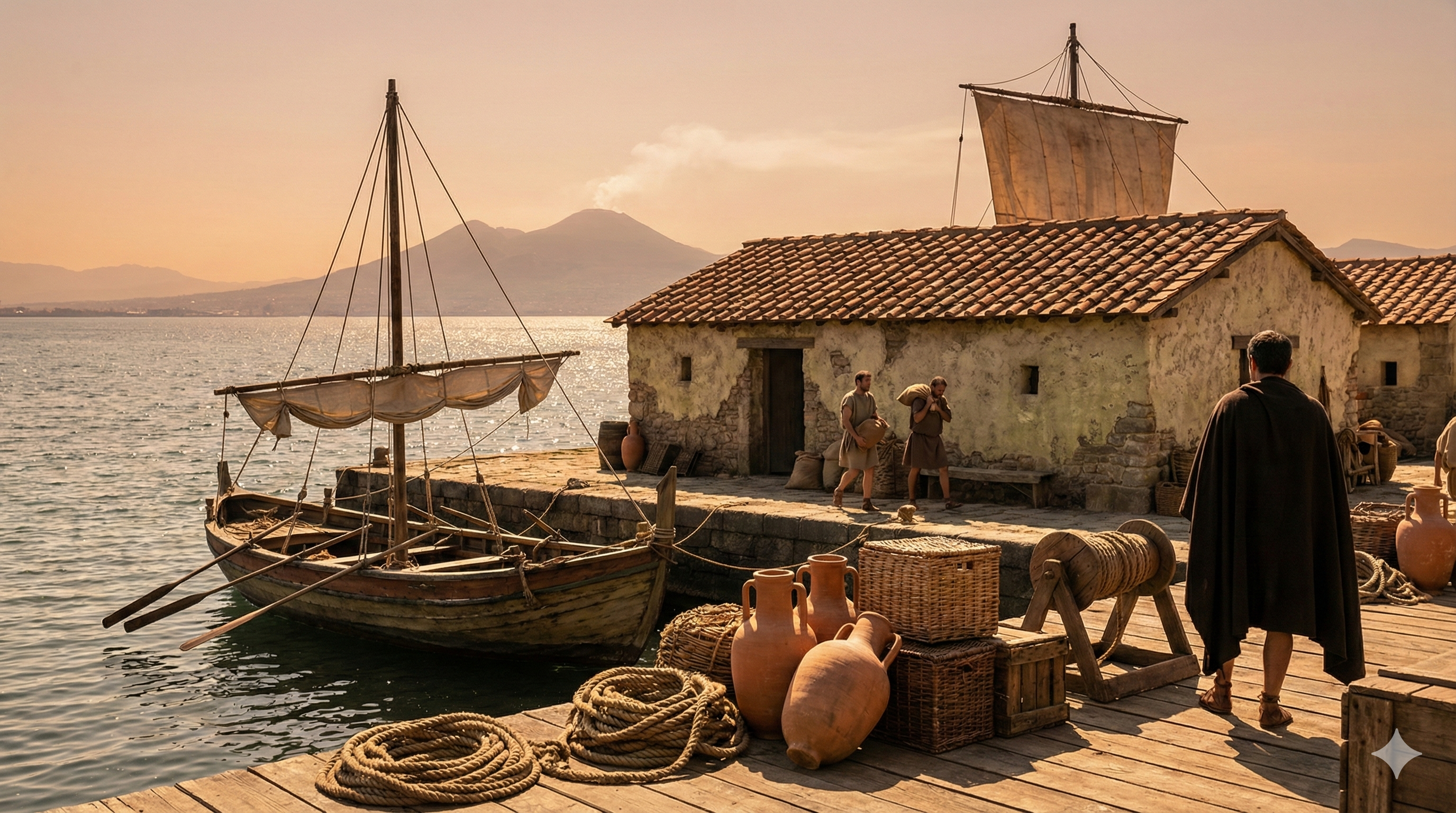
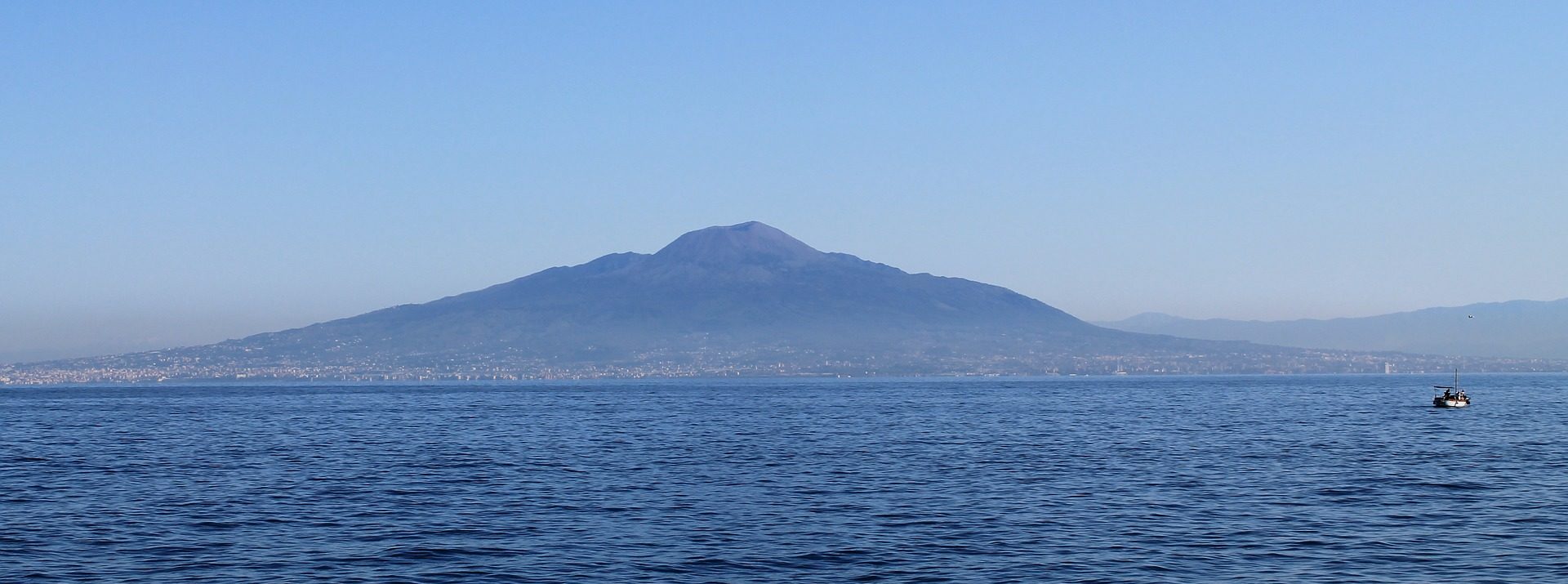
Stand at the top of Vesuvius and look down towards the ruins of Pompeii. You will notice that it is some distance from the sea. Why is this interesting? Well one of the reasons that Pompeii remain hidden for so long is due to the fact that it was once a port city: Meaning that it was on the coast rather than away from it. After the city was buried, those looking for the remains focussed their search on the coast as this had been the location of the city. The eruption of 79AD actually buried the city so deep, 6 metres below ash and debris, and added so much land mass that it gave the appearance of it vanishing completely. You can imagine the confusion of those searching when this port was no longer next to the sea. Let’s continue onto some more Pompeii facts!
Pompeii Fact 2: History Repeating Itself
Not that the inhabitants of Pompeii could possibly have known but 79AD wasn’t the first or the last major eruption. Prior to 79AD, there hadn’t been an eruption since around 1800AD. Evidence suggests that this eruption had buried several bronze-age settlements. It is estimated that Vesuvius has erupted about 100 times in its life. The last of these was in 1944. Only a few of the eruptions have been more powerful and destructive that the one of 79AD. That being said, the volcano is still active today and is mainland Europe’s only active volcano.
Pompeii Fact 3: Advanced Civilisation
Some of the lesser known Pompeii facts related to the way of life those who lived there. You may view Romans as the great innovators of history. Pushing technological boundaries and improving the life of those who lived in that time, it’s no surprise then that Pompeii was also a hub of advancement: Having found early boilers, healthy remains, and evidence that Pompeii was a holiday hotspot (even for Nero, the Roman Emperor). Yet none of their advancements could have prepared them for the eruption. In fact, prior to 79AD, there wasn’t even a word for volcano. This came after and comes from the word ‘Vulcan’. Vulcan was a Roman God, primarily the God of fire and metal forgery. Can you imagine not even knowing that such a threat existed right next to you? A little unnerving isn’t it?
Pompeii Fact 4: Instantaneous Death
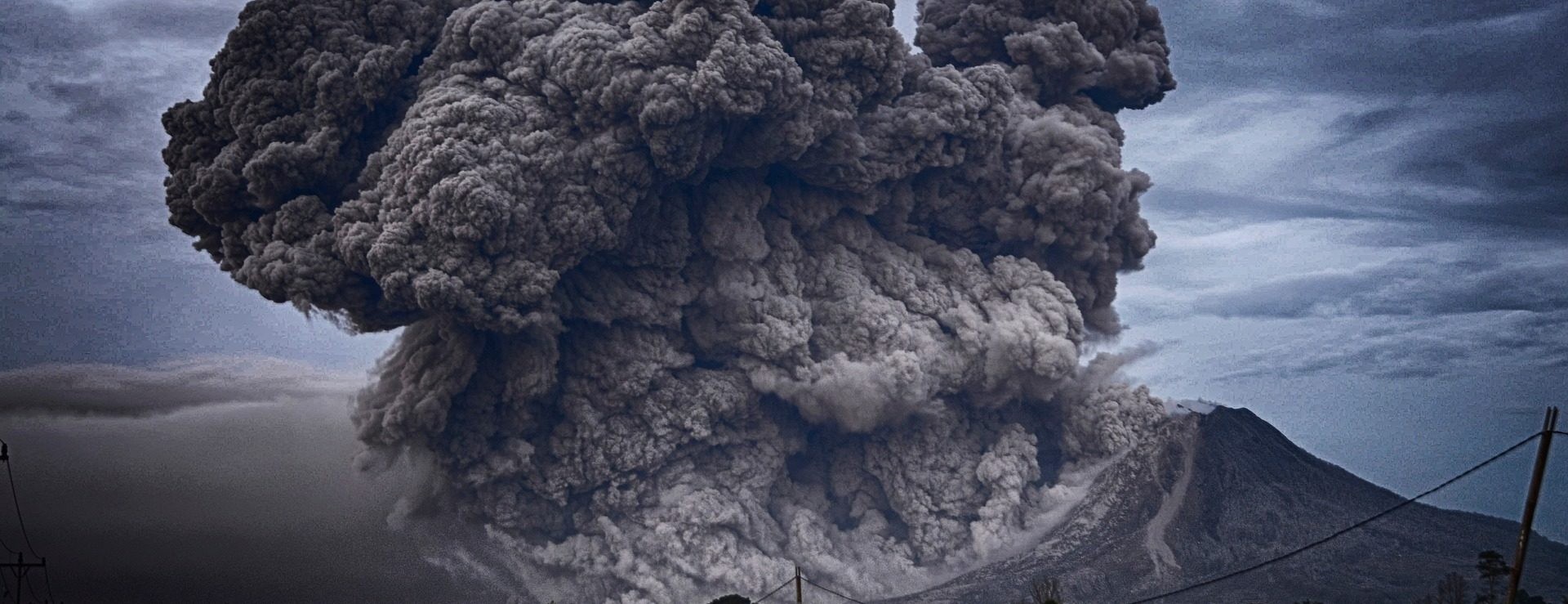
There are a wide variety of causes of death in relation to Pompeii. These seem to be changing over time and differ depending on which scientific organisation you ask. The prevailing theory at this present time goes as follow: there was an initial eruption which caused waves of ash and hot air to travel at tremendous speeds to the surrounding areas. It is estimated that the air inside building would have risen to up to 300 degrees in an instant. Ultimately this is what killed most of the villagers. This was accompanied by molten rock and pumice which blew out of Vesuvius at around 1.5 million tons per second. The eruption continued on for 24 hours. During this time, clouds of ash rained down on the 200 square miles around the volcano. Lava raced down at 100 kilometres per second (at temperatures of 700 degrees).
Pompeii Fact 5: Series of Unfortunate Events
When it comes to natural disasters, you can sometimes survive through sheer luck. Quite the opposite was true for the people of Pompeii. It’s a little known fact that warning of the eruption had begun as early as 62AD. The Pompeii Earthquake (as it is now known) occurred this year and is believed to have damaged Vesuvius in such a manner as to trigger the 79AD eruption. Small tremors appeared very early on and were soon followed by puffs of smoke leaving the volcano. While the majority of residents didn’t view this as a cause for concern, it is believed that wealthier individuals who had been visiting the surrounding holiday resorts did. They left at the first signs of trouble. What’s more: on that fateful day in 79AD yet another unfortunate natural event made matters worse. The wind direction that is more often than not experienced in Pompeii would have blown the ash and smoke away from the city. Unfortunately, on that day the wind was blowing in an unusually north-westerly direction which pushed the fallout straight over Pompeii.
Pompeii Fact 6: Death Toll
While the death of the nearby inhabitants was unavoidable after the initial eruption, this didn’t stop many from trying to fight until the end. Many make-shift masks have been found which were used to try and reduce ash inhalation. As I mentioned earlier, it was eventually the heat-flash that killed most of the victims. This makes it all the more tragic that those fighting to the end stood so little a chance of survival. The total death toll of Pompeii and other surrounding cities is still unknown. So far about 1500 bodies have been found in Pompeii. The total number of inhabitants of the surrounding cities is believed to be around 20,000. We may never know just how many lives were extinguished that day of August 24th 79AD.
Pompeii Fact 7: First Hand Account
There is one famous account of the eruption of Mount Vesuvius from 79AD. A man known as Pliny the Younger wrote a letter explaining his uncle’s (Pliny the Elder) death. The full letter is easy to find online but here is a small extract of what this man witnessed: “On the 24th of August, about one in the afternoon, my mother desired him to observe a cloud which appeared of a very unusual size and shape… a cloud, from which mountain was uncertain, at this distance (but it was found afterwards to come from Mount Vesuvius), was ascending, the appearance of which I cannot give you a more exact description of than by likening it to that of a pine tree, for it shot up to a great height in the form of a very tall trunk, which spread itself out at the top into a sort of branches; occasioned.” I imagine, either by a sudden gust of air that impelled it, the force of which decreased as it advanced upwards, or the cloud itself being pressed back again by its own weight, expanded in the manner I have mentioned; it appeared sometimes bright and sometimes dark and spotted, according as it was either more or less impregnated with earth and cinders. This phenomenon seemed to a man of such learning and research as my uncle extraordinary and worth further looking into.”